
PDF patterns for women’s T-shirts
Showing all 46 results
-

Akalat top, sizes 32 to 52
-

Alwena knickers & camisole set, sizes 34 to 54
-

Antéros top, sizes 36 to 50
-

Botticelli top – women’s
-

Cacao – the multi-option sweatshirt/T-shirt
-

Cara tank top PDF pattern, sizes 32 to 46
-

Cranberry – the T-shirt for the whole family
-

Duo Vanou – the top for women (sizes 34 to 54) and girls (ages 2 to 16)
-

Feel Good T-shirt PDF pattern, sizes 34 to 52
-

Fleury top – sizes 34 to 48
-

Freedom blouse PDF pattern from XXS to XL
-

Impala top, sizes 32 to 52
-

Judd top (easy) – women’s
-

Klimt women’s top PDF pattern (easy) sizes 34 to 48
-

Leonfe top/short dress PDF pattern, sizes 32 to 56
-

Libertina women’s T-shirt PDF pattern, sizes XXS to L
-

Limurine dress and top PDF pattern, sizes 32 to 60
-

LOO blouse PDF pattern from XS to L
-

Maly top PDF pattern, sizes 32 to 52
-

Matisse top (easy) – women’s
-

Mellite – women’s T-shirt / tank top
-

Nouipa top PDF pattern, sizes 32 to 60
-

PDF pattern for ‘L’Irrésistible’ top, sizes 34 to 48
-

PDF pattern for a cranberry sports tunic dress, sizes 34 to 56
-

PDF pattern for a multi-sleeved polo shirt for the whole family – Kiwi
-

PDF pattern for a wrap dress for women (sizes 34–54) and girls (ages 2–16)
-
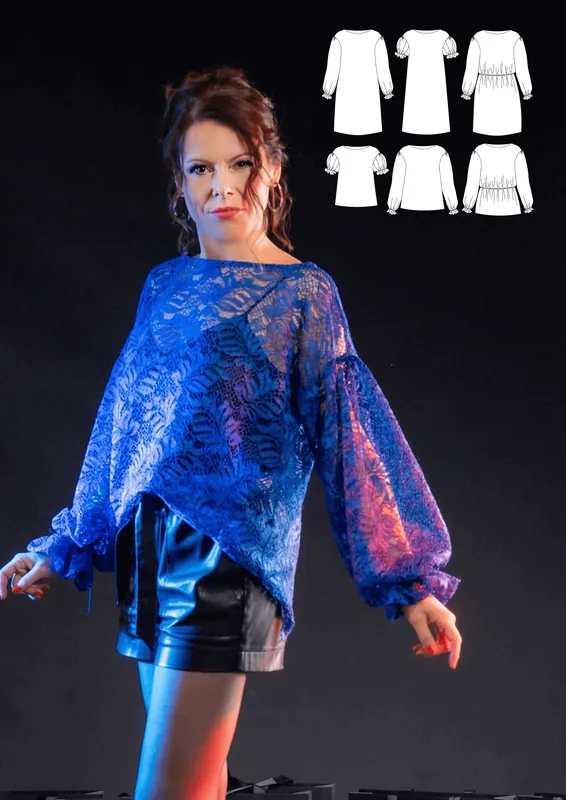
PDF pattern for Daumesnil dress/top, sizes 34 to 48
-

PDF pattern for the Barnabé top, sizes 32 to 56
-

PDF pattern for the Embrun blouse/dress
-

PDF pattern for the Pomélo women’s short-sleeved T-shirt, sizes 34 to 56
-

PDF pattern for the Roxana duo tank top for women (sizes 34–54) and girls (ages 2–16)
-

PDF pattern for the Signac women’s dress/top, sizes 34 to 48
-

PDF pattern for the Softy dress and T-shirt, sizes 34 to 52
-

PDF pattern for the Télès blouse, sizes 36 to 50
-

PDF pattern for the Zanka dress/top, sizes 32 to 56
-

PDF sewing pattern for Socks Duo jumper: women’s sizes 34–52 / girls’ sizes 6–16
-

Phillip top
-

Pineapple PDF pattern – the super-easy-to-sew tank top
-

Roxana – women’s tank top, sizes 34 to 54
-

Spritz T-shirt / tank top
-

Tao Family Pack T-shirt
-

Tao Women’s T-shirt
-

The Myxine top in sizes 34 to 46
-

The Varyo top or bodysuit, sizes 32 to 52
-

Touraco top, sizes 32 to 52
-

Vanou – women’s top, sizes 34 to 54
Women’s T-shirt PDF patterns: sewing with jersey without the usual mistakes
The T-shirt is probably the most frequently worn item in a woman’s wardrobe, and paradoxically one of the trickiest to get right when sewing. The reason boils down to a single letter: jersey. This stretch fabric behaves differently from woven fabrics, and a pattern designed to realise its full potential does not resemble a blouse or dress pattern.
The PDF patterns for women’s T-shirts offered here are designed with this challenge in mind right from the outset: ease of fit calculated according to the fabric’s percentage of stretch, darts and cuts adapted to the behaviour of jersey, and instructions that include machine settings and the type of needle to use. These are not adaptations of woven fabric patterns; they are jersey patterns.
What the seamstress needs to understand before cutting
Jersey isn’t a single fabric; it’s a family of fabrics. A 100% cotton jersey stretches by 30–40% across the width. A 95/5 cotton/elastane rib often stretches by 80–100%. A double-faced interlock behaves differently again. These figures are not trivial: they determine whether you choose your usual size or go down a size for a women’s fitted T-shirt pattern.
Most patterns in this category include a stretch gauge to print out and check before cutting. Make sure you use it. Sewing an oversized T-shirt from very fluid bamboo fabric that stretches by 120% will result in a shapeless garment. The same pattern in a brushed cotton jersey with 40% stretch, on the other hand, results in a structured T-shirt with good hold.
Another technical point that pattern descriptions don’t always cover: reinforce your shoulder seams. An unreinforced shoulder seam in jersey will always end up stretching when worn. A 1 cm strip of fusible interfacing applied along the grain before assembly solves the problem once and for all.
Women’s T-shirt patterns: oversized, fitted or boyfriend style – choosing the right cut
The available styles cover three main silhouettes, with very different levels of ease around the bust and hips.
- Oversized or boyfriend fit: 10 to 20 cm of positive ease at the bust. Works well with mid-range cotton jersey (180–220 g/m²). The hem is often worn tucked in at the front; check the finished measurements before cutting.
- Fitted or semi-fitted cut: neutral or slightly negative ease (-5 cm) for highly stretchy jerseys (65%+). Requires a fabric that recovers well, otherwise the side seams will pucker. 95/5 cotton/elastane interlock is the most reliable choice for this type of cut.
For women’s long-sleeved T-shirt patterns, check that the pattern includes an armhole calibrated for jersey: a woven fabric armhole is too high and too narrow to allow the jersey to drape properly. The difference is immediately apparent when trying it on.
Achieving a neat finish with jersey without an overlocker
This question comes up time and time again among sewers new to jersey: do you need an overlocker? No. A zigzag stitch 3 mm wide and 2.5 mm long on a standard sewing machine works perfectly on most jersey fabrics. What matters more is the needle: a stretch or jersey needle, size 75 to 90, depending on the thickness of the fabric. Using a universal needle on jersey causes skipped stitches; this isn’t a problem with the machine itself.
For neckline finishes, there are two methods depending on the pattern: a ribbing strip sewn flat and then turned up, or a strip cut from the main jersey fabric and applied with a slight stretch. The second method is quicker but requires practice. Well-documented patterns specify which method to use and the stretch ratio (usually 0.85 to 0.90 times the finished neckline circumference).
Jersey hems are sewn using a twin needle (two parallel needles on the same machine, with a gap of 2.5 to 4 mm between the needles) for a professional finish on the right side, with a concealed zigzag stitch on the wrong side. This is essential for short-sleeved T-shirts and the bottoms of garments.
Recommended fabrics for a successful women’s T-shirt sewing pattern
A few fabric/cut combinations that really work, without any guesswork:
- 180 g/m² cotton jersey, oversized or semi-fitted cut: the easiest to sew, withstands the heat of the iron well, good dimensional stability. Price per metre between €8 and €14.
- Bamboo/cotton (70/30), fitted cut: fluid drape, lightweight, ideal for T-shirts worn close to the body. Slippery to cut, so use fine pins or fabric clips.
- 1×1 or 2×2 cotton/elastane rib: maximum stretch (80%+), similar to ready-to-wear ribbed T-shirts. Suitable only for fitted or very fitted cuts.
Pure modal is beautiful but not recommended for beginners: it loses its shape easily and the seams can form small waves if the machine tension isn’t perfectly calibrated.
Complete your wardrobe with other women’s patterns
A well-cut T-shirt calls for well-cut bottoms. To complete your hand-sewn looks, discover the women’s trouser patterns that work particularly well with jersey cuts. The women’s sweatshirt patterns use the same basic techniques and allow you to progress naturally to thicker fabrics such as fleece or brushed sweatshirt fabric. For a more smart-casual piece that still prioritises comfort, the women’s dress patterns include plenty of jersey designs. And if you’re just starting out and want to test your machine before investing in fabric, the collection of free PDF patterns offers a few designs to try out with no obligation.