
Printable sewing patterns
Showing all 48 results
-

Amande: the bomber jacket
-

Azureen short dress PDF pattern, sizes 32 to 60
-

Beira hood for teens, women & men
-

Bergamote – the jumpsuit with 54 variations
-

Cacao – the multi-option sweatshirt/T-shirt
-
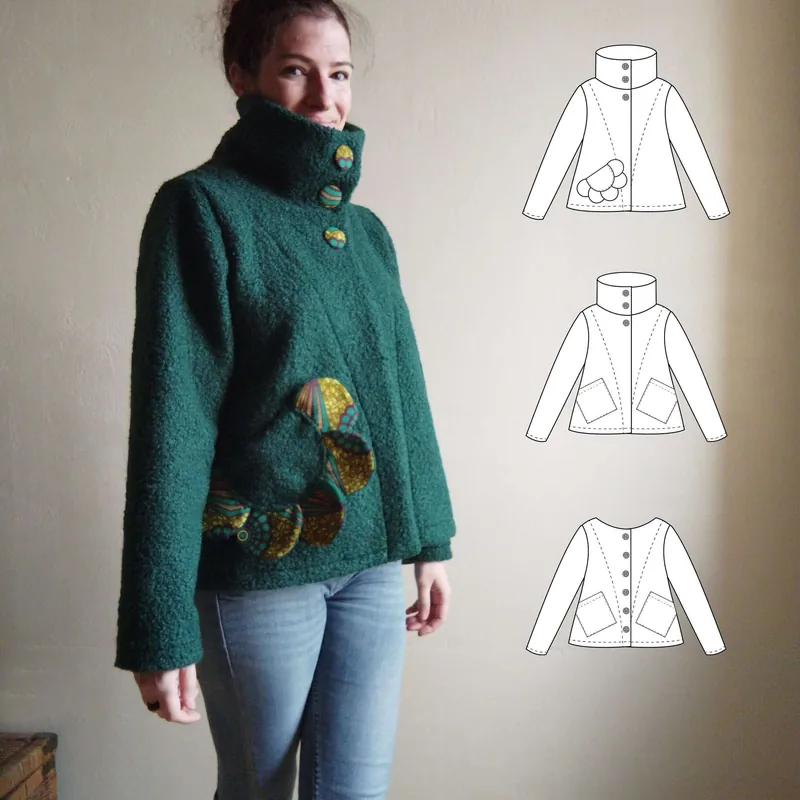
Camur jacket, sizes 32 to 60
-

Cannelle – the checked jumper
-

Chambarand trousers – PDF pattern for children aged 12 months to 14 years
-

Châtaigne – the jumper with 32 versions
-

Cranberry – the T-shirt for the whole family
-

Cylia children’s dress
-

Darla – the shoulder bag in sizes S, M and L
-

Diabolo Mint Pyjamas / Pyjama Shorts
-

Duo Vanou – the top for women (sizes 34 to 54) and girls (ages 2 to 16)
-

Goyave – adjustable harem trousers and Bermuda shorts
-

Grenade – the adjustable leggings and shorts
-

Griottes – high-top (or low-top) booties
-

Ibaia skirt PDF pattern, sizes 32 to 52 (3 lengths)
-

Ibis bomber jackets, sizes 32 to 52
-

Kumquat – shorts / Bermuda shorts / trousers
-

La Captivante Cape – one size fits all
-

Litchi: T-shirt, sweatshirt and dress in one pattern
-

Mapulin sweatshirt dress PDF pattern, sizes 32 to 60
-

Mellite – women’s T-shirt / tank top
-

Mini-Sherpa – unisex fleece for children aged 2 to 16
-

PDF pattern for a summer top and dress in ‘Clémentine’ for babies, children and women
-

PDF pattern for a tangerine-coloured wrap dress for children/women
-

PDF pattern for blueberry dungarees for babies, children and women
-

PDF pattern for Fauvette skirt / trousers / shorts, sizes 32 to 52
-

PDF pattern for Fauvette trousers / shorts / skirt for children aged 2 to 12
-

PDF pattern for lilac skirt-shorts, sizes 34 to 60
-

PDF pattern for Macadamia hooded zip-up jumper/jacket
-

PDF pattern for the Airelle blouse dress for babies / children / women
-

PDF pattern for the Eolya long skirt, sizes 32 to 52
-

PDF pattern for the Mini-Roxana girls’ tank top, sizes 2 to 16
-

PDF pattern for the Mini-Vanou girls’ top, sizes 2 to 16
-

PDF sewing pattern for a ruffled skirt – Merise – for babies, children and women
-

PDF sewing pattern for the Margotte fitted blouse dress, sizes 32 to 56
-

Pineapple PDF pattern – the super-easy-to-sew tank top
-

Poppy skirt-shorts / culottes
-

Roxana – women’s tank top, sizes 34 to 54
-

Sherpa – unisex fleece from XS to XXXL
-

Sherpa-fleece duo for adults (XS–XXXL) and children (aged 2–16)
-

The Sérac half-moon bag in 3 sizes
-

Titus Maxi Sweatshirt from XS to XXXL
-

Titus sweatshirt for ages 2 to 16
-

Vanou – women’s top, sizes 34 to 54
-

Zya trousers/shorts – PDF pattern in sizes 32 to 60
Projectable sewing patterns: work at actual size without printing a single sheet
An adult coat pattern on A0 paper requires between 30 and 50 sheets of A4 paper to be joined together with adhesive tape – easily 45 minutes of preparation before you can even put the first pencil mark on the fabric. The projectable pattern eliminates this step. The SVG or PDF file is displayed directly onto your cutting mat via a correctly positioned video projector, at actual size, and you can start working in under 10 minutes.
This method became the norm in amateur sewing workshops from 2019 onwards, driven by French-speaking digital pattern designers who adapted their files to a projectable format (separate layers, integrated calibration square, adjustable scale). Today, it is the standard workflow for any seamstress who regularly works on multi-size garments or production runs.
Setting up your projection area: what you need to know before buying
The projector must be positioned directly above the fabric, not at an angle. A lateral or frontal tilt introduces trapezoidal distortion that distorts the cutting lines, even by just a few millimetres. The optimal distance between the lens and the work surface is generally between 1.8 m and 2.5 m to cover a standard cutting area of 120 x 60 cm. If the distance is less than 1.5 m, you will need to scroll through the pattern in sections for large pieces.
Before each session, the calibration square included in every pattern (usually 10 x 10 cm, printed in the corner of the file) allows you to adjust the scale to the nearest millimetre. In Inkscape (free) or Affinity Designer, this takes 2 minutes. For adjusted sizes, you modify the overall scale of the file: increasing the size of a size 40 dress by 3% to size 42 can be done in a few clicks, which would be impossible with a paper pattern.
Projectable file formats: SVG, A0 PDF, DXF – what’s the difference in practice?
The SVG format is best suited to pattern drafting: it is vector-based, supported natively by Inkscape, and each piece can be isolated on its own layer. A0 PDF is handy for printing at a copy shop (around 2 to 5 euros per sheet at Cultura or a local print shop), but requires conversion if you wish to use it with pattern drafting software. DXF is reserved for users of pattern-making software such as VALENTINA or Seamly2D.
The patterns offered here are provided in both formats where relevant, accompanied by an instruction booklet and, for many designs, a video tutorial on how to assemble them. This isn’t just a nice extra: for a technical garment such as a women’s jumpsuit or a women’s coat with lining and interfacing, the video allows you to see exactly how the seam allowances fit together before cutting into the fabric.
Which patterns to choose depending on your skill level and projects
Projectable patterns cover all levels, from beginner projects to technical construction. To get started with the projection method, opt for a simple women’s skirt or a women’s top: few pieces, quick to trace, and any calibration errors are immediately visible. For experienced seamstresses, structured women’s dresses or women’s jackets make full use of the benefits of projection on complex curved sections (armholes, necklines, tailored collars).
Projectable children’s patterns follow a different logic: sizes change quickly, and the advantage of being able to go from 4 to 6 years without reprinting is particularly practical. The collection of PDF children’s patterns includes designs suited to all body types, from newborns to children’s sweatshirts in teen sizes.
- Beginner: skirts, tops, bags, women’s accessories and children’s accessories — 3 to 8 pieces to design, assembly without complex topstitching
- Intermediate: women’s blouses, women’s trousers, women’s pyjamas — handling notched seams and rolled hems
- Advanced: coats, women’s jumpsuits, lingerie and underwear — multi-session pattern drafting for large garments, interfacing, lining
Designers of printable patterns available on Sewing Patterns
The selection brings together French brands that have built their catalogues around the digital format from the very beginning. Atelier Adriette is known for its everyday garments with a neat drape and its particularly detailed instructions. Klafoutis stands out for its children’s designs, with a focus on raglan armholes that allow for freedom of movement. Instinct Couture offers modern silhouettes for women with video tutorials included in the file. Maya Patterns, Miss Cactus, Lab Zéro and around fifteen other designers round off the range, each with their own distinctive stylistic approach.
If you’re new to digital sewing, do also check out the patterns with video tutorials and the free PDF patterns to try out the workflow before investing in a paid pattern.
FAQ — Projectable patterns
Which video projector should I choose for sewing?
A projector with a minimum of 3,000 lumens and 1080p resolution is sufficient for most purposes. Short-throw models allow you to project a large image from a short distance (1 m instead of 2 m), which is handy in compact workshops. Approximate budget: 150 to 400 euros for a model suitable for sewing.
Can you project directly onto the fabric, or do you need to mark it out first?
Both methods work. Projecting directly onto dark fabric is possible with a projector that is bright enough (3,500 lumens+). On light-coloured fabric, many seamstresses prefer to mark the cutting lines on the wrong side of the fabric using tailor’s chalk or a serrated wheel, then cut. This step takes 5 to 10 minutes depending on the complexity of the pattern.
Do projectable patterns include seam allowances?
It depends on the designer: some patterns include seam allowances (usually a standard 1 cm), whilst others exclude them to leave the choice up to the seamstress. This information is always specified in the pattern description and in the instruction booklet included in the file.
Can a pattern designed for projection still be printed?
Yes. A0 PDF files are intended for printing at a print shop. The SVG format can be converted to PDF using Inkscape. You purchase the file once and can use it for both projection and printing, without any restrictions.