Trouser patterns
Showing all 48 results
-

Aïs trousers and shorts, sizes 32 to 52
-

Alta trousers
-

Alvida baggy trousers
-

Baby and children’s shorts and Bermuda shorts
-

CALI Trousers, sizes 30 to 58
-

Camomille sportswear pyjama trousers PDF pattern, sizes 34 to 56
-

Chaource children’s pyjama PDF pattern for ages 2 to 10
-

Comfortino PDF sewing pattern for men & women, sizes S to XXL
-

EBENE children’s trousers
-

Judd top (easy) – women’s
-

Jumpsuit from XXS to XXL – Lady Attitude
-

Khaki – chino trousers
-

Kim – women’s leggings, sizes 34 to 54
-

Kim Duo – leggings for women (sizes 34–54) and girls (ages 2–16)
-

Kumquat – shorts / Bermuda shorts / trousers
-

LAST children’s trousers
-

Mini-Kim – leggings for girls aged 2 to 16
-

Mr Stilo men’s trousers PDF pattern, sizes XS to XL
-

Munster trousers for babies and children
-

Orsi trousers or shorts
-

PDF pattern for ‘Simply Sophisticated’ trousers and top, sizes XXS to XL
-

PDF pattern for a short-sleeved jumpsuit, sizes XXS to XL
-

PDF pattern for EL CAPITANO men’s trousers, sizes XS to XXL
-

PDF pattern for Fauvette skirt / trousers / shorts, sizes 32 to 52
-

PDF pattern for Fauvette trousers / shorts / skirt for children aged 2 to 12
-

PDF pattern for Honolulu skirt-shorts overalls, sizes 34 to 48
-

PDF pattern for Nashi palazzo trousers for women and children
-

PDF pattern for the ‘Vanille’ women’s jumpsuit and trousers, sizes 34 to 56
-

PDF pattern for women’s Q trousers, sizes 32 to 60
-

PDF pattern for women’s trousers, sizes 32 to 60
-

PDF pattern for Yasmine women’s wide-leg trousers, sizes 32 to 56
-
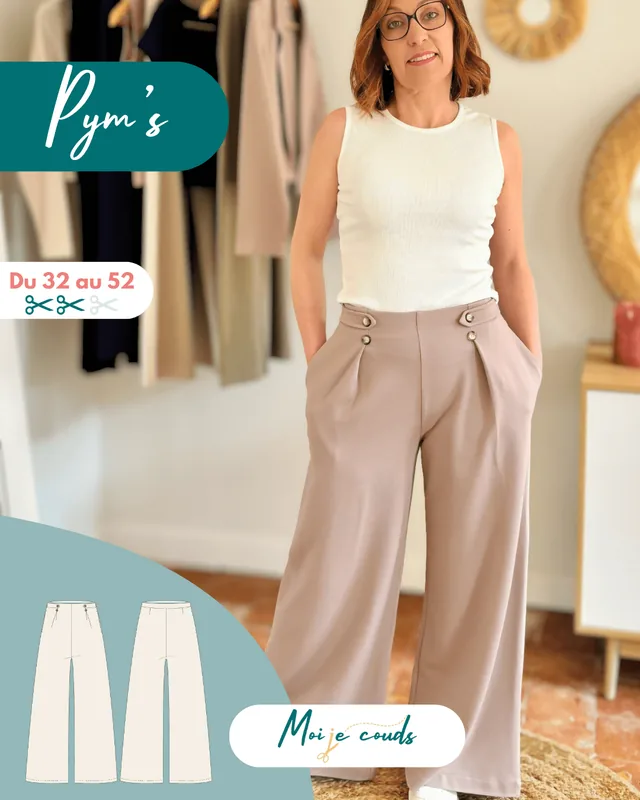
Pym’s trousers – women’s PDF pattern, sizes 32 to 52
-

Rigotte trousers – women’s PDF pattern, sizes 34 to 54
-

Rigotte Trousers Pack – Children & Women, sizes 12 months to 54
-

Springy trousers or shorts, sizes 32 to 52
-

Sprint trousers, sizes 32 to 52
-

Suri trousers, sizes 30 to 58
-

The Figuette shorts in 13 sizes
-

Titouan shorts – women’s and children’s
-

Trousers – XXS/XL – Caramel Delight
-

Trousers – Deauville shorts – sizes 34 to 48
-

Trousers from XS to XXL – Basil
-

Trousers from XXS to XL – Vintage Cadillac
-

Victor trousers
-

Vintage Cadillac trousers PDF pattern from XXS to XL
-

Yasmine Mega Pack – top + trousers – women & children
-

Yasmine Women’s Pack – Top + Trousers, sizes 32 to 56
-

Zya trousers/shorts – PDF pattern in sizes 32 to 60
PDF trouser patterns: making a garment that really fits
Of all items of clothing, trousers involve the greatest number of body shape variables. Inseam length, crotch depth, hip circumference and the waist-to-hip ratio vary far more between two people of the same size than they do for a skirt or a blouse. That’s why sewing your own trousers makes practical sense: you achieve a drape and comfort that are impossible to find in standard ready-to-wear garments.
The shop stocks sewing patterns for women’s, men’s and children’s trousers, created by French designers whose patterns have been tested on real body types. The ease built into each pattern is calculated according to the intended silhouette: 2 to 4 cm at the hips for fitted or straight-leg trousers, 8 to 15 cm for a wide-leg cut, and 20 cm or more for palazzo trousers. This isn’t just a cosmetic detail: it’s what determines whether you can sit down, climb stairs and wear the trousers for a whole day without any discomfort.
Which trouser cut to choose depending on your sewing ability
Wide-leg trousers in linen or viscose are the easiest way to get started with sewing trousers. The loose fit is forgiving of any inaccuracies in the pattern and does not require an intermediate basting piece. Conversely, fitted cigarette trousers in gabardine or woollen fabric require you to make a basting toile to adjust the crotch before cutting into the final fabric. This isn’t a general requirement: it’s a principle specific to trousers, regardless of your experience with other garments.
The crotch remains the main sticking point for most seamstresses tackling this for the first time. If you’re new to this type of garment, the patterns with video tutorials allow you to visualise the assembly order: crotch seams first, then side seams, then the waistband. This sequence is counter-intuitive compared to other garments, and it’s better to see it demonstrated than to try to work it out from flat patterns.
Which fabric to use for trousers: combinations that work
Linen drapes well for loose-fitting summer trousers but creases within a few hours. If this is a deal-breaker, opt for pre-washed linen or a linen-viscose blend. Flowing viscose, such as crepe, adds movement but slips during cutting: pin every 5 cm or use temporary fusible interfacing to hold the pieces in place. Denim for trousers should be used in 9 to 12 oz (250 to 340 g/m²): any lighter and the fabric lacks structure; any heavier and it becomes difficult to stitch through multiple layers at the crotch. Corduroy must be cut in a single direction, with all pieces cut the same way to avoid variations in colour depending on the angle of the light.
For children’s trouser patterns, jersey and sweatshirt fabrics are the most common choices for practical reasons: their stretch makes them easier to put on, they withstand repeated washing at 40°C, and their flexibility means they can cope with a less-than-perfect cut. Most of the children’s designs in the shop feature an elasticated waistband, which eliminates the need for a fastening and reduces the time taken to make a finished garment to two or three hours.
Designers specialising in trouser patterns to watch out for
Lab Zéro offers sizes up to 58–60 (hip circumference around 130 cm), tested on real people rather than extrapolated from a base size 42. Atelier Adriette is renowned for its detailed technical instructions, which are particularly useful for constructing waistbands and fitting concealed fastenings at the side or crotch. Klafoutis focuses mainly on children’s wear, with multi-size layered patterns and built-in growth allowances across several sizes. Maya Patterns and Moi Je Couds favour minimalist silhouettes, such as straight-cut or cigarette styles, which are well suited to dress fabrics such as wool crepe or cotton satin.
PDF format: A4, A0 or projection for sewing your trouser pattern
The patterns in the shop are available in three formats. The A4 format works with any home printer but requires you to assemble several dozen sheets, ensuring you follow the joining marks precisely. The A0 format can be printed on one or two sheets at a print shop for 3 to 6 euros: this is quicker and more accurate for a trouser pattern that often spans more than a metre in length. Projecting onto a light table or white wall has become widely popular within the French-speaking sewing community over the last three years: no paper to manage, calibration to the nearest centimetre, and size changes in just two clicks. Most recent patterns include all three formats in the same downloadable file.
Sizes are expressed in actual measurements (waist circumference, hip circumference, inside leg length), with a conversion table specific to each brand. Compare your measurements to this table rather than to standard retail sizes: a size 40 from one designer does not necessarily correspond to the same measurements from another.
Pairing your trouser pattern with other sewn garments
Wide-leg trousers look great with a fitted top or a tucked-in blouse. Check out the women’s blouse patterns and the women’s top and T-shirt patterns for complementary silhouettes. To create a complete outfit in a single piece, the jumpsuit and dungaree patterns use the same construction as the trouser legs with a attached bodice: this is a great way to practise sewing the crotch seam, resulting in a very neat finished look. The women’s trouser patterns, children’s patterns and men’s patterns are listed in their dedicated collections so you can filter by gender and find the right pattern for your project.