
PDF sewing pattern for spring
Showing all 48 results
-

Adventurer Sweatshirt – PDF sewing pattern for children aged 2 to 16
-

Altitude zip-up hoodie – PDF sewing pattern for children aged 2 to 16
-

ALWENA duo knickers and camisole set for women (34–54) and girls (ages 2–16)
-

Alwena knickers & camisole set, sizes 34 to 54
-

Arthur women’s bomber jacket PDF pattern, sizes 34 to 44
-

Ascension Pack – 5 hoodies for the whole family
-

ATLAS adult sweatshirt PDF pattern, sizes XXS to 6XL
-

Basic unisex sweatshirt, XS to 3XL, 2 body types – Grenade
-

BOLIDE jumper for ages 2 to 16
-

Comfortino PDF sewing pattern for men & women, sizes S to XXL
-

Cylia children’s dress
-

Feel Good T-shirt PDF pattern, sizes 34 to 52
-

Gaby dress / blouse – women’s sewing pattern, sizes 34 to 58
-

Gaby dress/blouse – sewing pattern for children aged 2 to 14
-

Gaby duo pack – dress & blouse pattern for women and children
-

Livarot sweatshirt for adults, sizes 34 to 54
-

Mini A Sweatshirt – PDF sewing pattern for babies aged 12 months to 4 years
-

Mini ALWENA knickers and camisole set for girls, sizes 2 to 16
-

Miss Cactus baguette bag PDF pattern
-

PDF pattern for a multi-sleeved polo shirt for the whole family – Kiwi
-

PDF pattern for a top and dress duo, sizes 34 to 46
-

PDF pattern for adult Alpine sweatshirt, sizes XXS to 6XL
-

PDF pattern for EL CAPITANO men’s trousers, sizes XS to XXL
-

PDF pattern for girls’ & women’s headband (S / M / L)
-

PDF pattern for the ‘Vivre la Confiance’ short dress, sizes XS to L
-

PDF pattern for the Artista dress, sizes XS to XL
-

PDF pattern for the Dark Star mini dress, sizes XXS to L
-

PDF pattern for the Gala Apple maxi dress, sizes 34 to 56
-

PDF pattern for the Pomélo women’s short-sleeved T-shirt, sizes 34 to 56
-

PDF pattern for women’s black raisin overshirt, sizes 34 to 56t
-

PDF pattern for women’s Q trousers, sizes 32 to 60
-

PDF pattern for women’s trousers, sizes 32 to 60
-

PDF pattern for women’s/children’s Noisette skirt
-

PDF pattern for Yasmine women’s wide-leg trousers, sizes 32 to 56
-

PDF sewing pattern for the ‘White Grape’ shirt dress / shirt, sizes 34 to 56
-

PDF sewing pattern for the IRIS maxi dress, sizes 30 to 58
-

PDF sewing pattern for the Zoya women’s dress, sizes XXS to XL
-
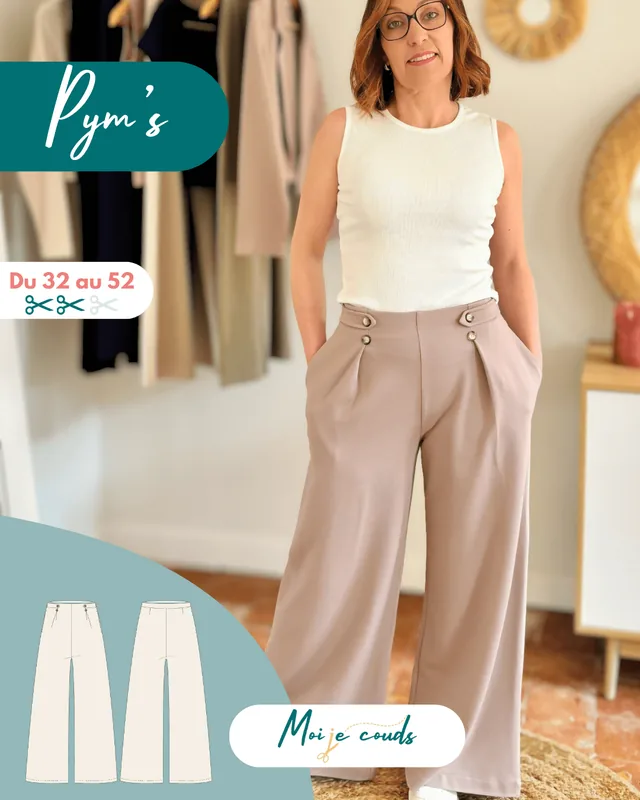
Pym’s trousers – women’s PDF pattern, sizes 32 to 52
-

Raoul T-shirt PDF pattern, sizes 38 to 54
-

Rigotte trousers – women’s PDF pattern, sizes 34 to 54
-

Rigotte Trousers Pack – Children & Women, sizes 12 months to 54
-

The Belam blouse or dress, sizes 32 to 52
-

The City skirt, sizes 32 to 48
-

The Vinka cardigan, sizes 32 to 52
-

TRUCK jumper from XXS to 6XL
-

Yana skirt PDF pattern, sizes 34 to 44
-

Yasmine Women’s Pack – Top + Trousers, sizes 32 to 56
-

Yasmine women’s top – sewing pattern sizes 32 to 56
PDF sewing patterns for spring: choosing the right designs between March and June
Spring presents a real challenge for seamstresses: temperature differences between the morning and midday often reach 10 to 14°C in April. A garment sewn for 8°C at dawn will be stifling at 20°C in the afternoon. The PDF sewing patterns for spring address this specific challenge, rather than an abstract season. What we’re looking for here is clever layering, cuts that allow air to circulate without being see-through, and fastenings that let you quickly adapt the garment to the current temperature.
Which fabrics to use for spring sewing: weights and properties
The choice of fabric entirely determines the success of a mid-season pattern. For a blouse or top, a cotton twill weighing between 120 and 150 g/m² drapes well and doesn’t cling to the skin as soon as temperatures rise. Viscose, which is often recommended, is trickier to work with: it slips during cutting, loses its shape if wet without care, and shrinks by around 5 to 8 per cent on the first wash if not pre-washed. Lightweight linen (150 to 180 g/m²) is the fabric of late spring, generally from May onwards, when night-time temperatures remain consistently above 12°C.
For light jackets and overshirts, 160 g/m² chambray cotton or a lightweight polyester crepe are easier to work with than raw linen. Crepe hardly creases at all, which makes all the difference if the garment is worn all day.
Spring PDF patterns for women: dresses, blouses and light jackets to sew
The most popular spring styles revolve around three types of garment. The lightweight midi dress with a round or square neckline, unlined, in printed cotton: it can be worn on its own at 22°C or with a light jacket when the wind picks up. The 3/4-sleeved blouse is perhaps the most versatile piece of the season: it keeps your arms warm in the morning and can easily be rolled up in the afternoon. Finally, flared skirts in viscose or flowing cotton, in a mid-length style, work from April right through to October if you pair them well.
Lightweight jumpsuits and dungarees are enjoying a resurgence in popularity in DIY sewing: they require little fabric, the patterns are often accessible to intermediate sewers, and the finished item is hard to find in ready-to-wear at a reasonable price.
PDF format: A4 or A0 printing – what difference does it actually make?
A downloadable PDF pattern is almost always available in two print formats: A4 (to be assembled sheet by sheet) and A0 (to be printed at a print shop for 2 to 4 euros per sheet). The A4 version is free to print at home but is time-consuming: a dress pattern in size 40 consists of around 30 to 50 sheets to cut out and stick together. The A0 version is ready in 10 minutes once printed. If you sew regularly, the A0 format pays for itself by the second or third pattern you print.
Most patterns in this collection include both formats. Before printing, check that your software is set to ‘actual size’ and not ‘fit to page’: a 5 cm square on the pattern should measure exactly 5 cm on the printed paper. A 2 mm discrepancy in this square will result in a finished garment that is one whole size too small or too large.
How to choose between beginner, intermediate and advanced for a spring pattern
Spring is a good time of year to try your hand at slightly more technical pieces, as lightweight fabrics are more forgiving than winter woollens when it comes to drape. A V-neck dress with a bias cut, for example, may seem daunting, but sewing mistakes are easier to correct in a lightweight viscose than in a thick fabric.
- Beginner level: opt for patterns without zips (elasticated neckline or boat neck), unlined, and with fewer than 8 pattern pieces. A straight skirt with an elasticated waist in cotton poplin is a project that can be finished in an afternoon.
- Intermediate level: blouses with notched collars, empire-line dresses or unlined jackets with facings. These designs require precision when ironing and when working on curved seams, but spring fabrics make them easier to handle.
Spring patterns for children: the specifics of the mid-season
Children’s spring patterns follow the same principles of layering, with one additional consideration: children move about more and sweat more quickly. Styles with wide armholes and a slightly shorter back (so the top doesn’t ride up over the trousers) are best. For girls, dresses with built-in bloomers remain practical up to the age of 6–7. For boys, long- or three-quarter-sleeved cotton jersey T-shirts are ideal for the April–May transition.
Designers to watch out for well-constructed spring PDF patterns
Atelier Adriette offers dress and blouse patterns with detailed, step-by-step photo instructions, which are useful for seamstresses getting back into sewing after a break. Comme une Fleur stands out for its original patterns, which are less basic than those found in high-street shops. Miss Cactus covers sizes 34 to 52 well, with designs tailored to a variety of body shapes. Les Patronnes regularly release seasonal designs with fabric selection guides included with the pattern, which is a great help when you’re torn between two fabrics.
For seamstresses looking to expand their wardrobe beyond spring, the selection of women’s coat patterns covers the transitional seasons and early autumn. The free PDF patterns allow you to try out a level of difficulty or a cut before investing in a paid pattern.
FAQ on spring PDF sewing patterns
What is the difference between a spring dress pattern and a summer dress pattern?
A spring dress pattern generally features short or three-quarter sleeves, a partial lining or light interfacing at the armholes, and cuts that remain wearable at 15°C. A summer pattern tends to feature sleeveless designs, more open necklines and no lining. In practice, a pattern labelled ‘spring’ can often be adapted for summer simply by removing the sleeves.
Can you print a PDF pattern in a larger size than intended to adapt it to your body shape?
No, enlarging the pattern by printing distorts the proportions of all the pieces simultaneously and is not the same as proper grading. To move from one size to another, you need to work directly on the full-size printed pattern: interpolate between two size lines, lengthen the side seams or adjust the seam allowance. Most patterns in this collection include several sizes on the same sheet.
Which spring fabrics are easiest for a beginner to sew?
Cotton poplin at 120–140 g/m² remains a safe bet: it doesn’t slip, is easy to iron, holds pins well, and any sewing mistakes can be unpicked without leaving marks. Avoid viscose and jersey for your first spring projects. Linen creases but is easy to cut straight and overlock.
Can a spring PDF pattern be used for summer sewing?
In most cases, yes. Lightweight spring garments (blouses, short-sleeved dresses, flowing skirts) can be worn until September, depending on the region. The main difference is the fabric: you switch from 140 g/m² cotton to 80 g/m² batiste or cotton gauze for very hot days, without altering the pattern.