
Women’s jacket PDF patterns
Showing all 31 results
-

Amande: the bomber jacket
-

Arthur women’s bomber jacket PDF pattern, sizes 34 to 44
-

Arybelle jacket, sizes 32 to 60
-

Axia jumper PDF pattern, sizes 32 to 52
-

Bogota jacket
-
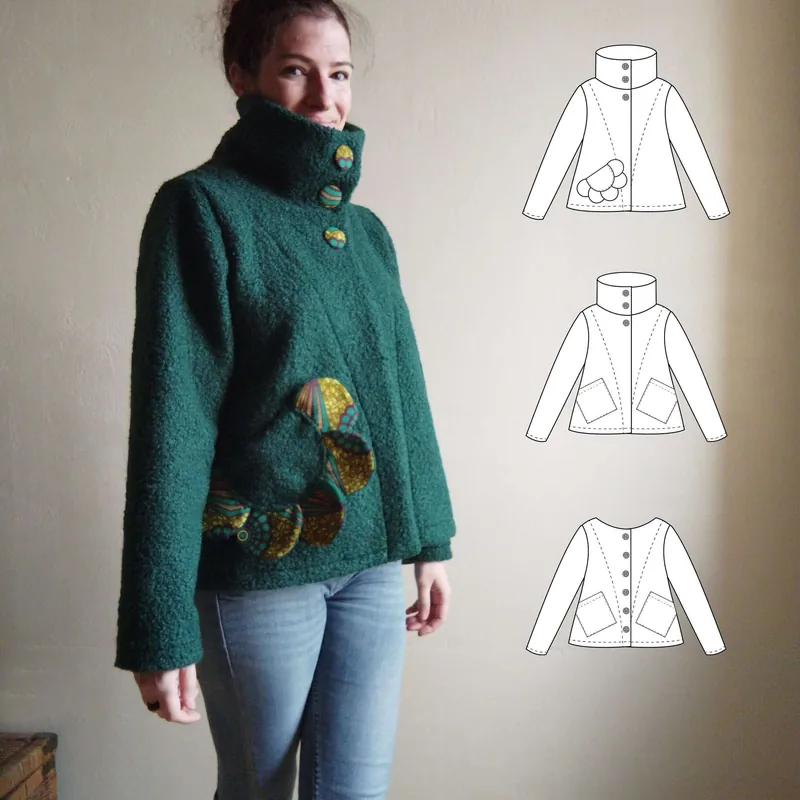
Camur jacket, sizes 32 to 60
-

Cérès shepherd’s cardigan
-

Cosmos jacket
-

Cybèle jacket in sizes 36 to 50
-

Framboise – the perfecto
-

Ginger jacket PDF pattern, sizes 34 to 48
-

Goya shepherd’s jacket – women’s
-

Ibis bomber jackets, sizes 32 to 52
-

Isatis blazer, sizes 32 to 52
-

Jacket – XS to XL – Chic Pick
-

Jade coat and jacket
-

Khoros jacket, sizes 36 to 50
-

La Captivante Cape – one size fits all
-

Milda coat in 15 sizes from 30 to 58
-

Monet jacket
-

Orséis blazer, sizes 36 to 50
-

PDF pattern for the Lucky Stripes shirt, sizes XS to XL
-

PDF pattern for women’s black raisin overshirt, sizes 34 to 56t
-

Phoenix bomber jackets
-

The Bloomy jacket, sizes 34 to 46
-

The Lory jacket, sizes 32 to 52
-

The snap-fastening jacket, sizes 32 to 52
-

The Vinka cardigan, sizes 32 to 52
-

Tourmaline cardigan PDF pattern, sizes 32 to 60
-

Turner cape
-

Women’s cardigan, sizes 34 to 56, 4 body types – Jasmin
PDF patterns for women’s jackets: blazers, spencers and structured jackets
The jacket is the most technically demanding item in a woman’s wardrobe. Not because it’s particularly impressive, but because it embodies everything that defines masterful tailoring: the tailored armhole, the notched or shawl collar, the lining sewn by hand or machine, and the buttonhole bias binding. Sewing a well-fitting jacket requires a reliable pattern, not a generic size chart that ignores variations in bust and shoulder width.
The PDF patterns for women’s jackets collected here cover the entire spectrum: from the fitted blazer in gabardine for the office to the short coat lined in boiled wool for winter, and the short spencer to wear over a summer dress. All are available in a PDF format suitable for home printing, with an A0 option for those with access to a plotter or large-format printer.
Choosing between a structured blazer, an oversized jacket and a spencer: how the cut really makes the difference
A classic tailored blazer relies on precise construction: reinforced shoulder yokes, a lined button placket, and two-piece tailored sleeves. It is the most technically demanding style, but also the one that delivers the most professional result. Made from 280 g/m² wool twill or stretch gabardine, it retains its shape for several years if carefully tailored.
The women’s oversized jacket is more forgiving when it comes to armhole adjustments. Its construction is often simpler, with one-piece sleeves and dropped shoulders that avoid the classic assembly problems. Made from 12 oz denim or cotton canvas, it can be sewn in a day by an experienced seamstress.
The women’s spencer pattern covers the bust without extending beyond the hips: a cut just below the waist, sometimes with a very pronounced waist dart. It works well in corduroy for autumn and in linen for spring. Less fabric, less lining to manage, immediate results.
Recommended fabrics depending on the type of jacket you’re sewing
Choosing the right fabric isn’t just a question of style; it’s a question of how it holds up. A 200 g/m² polyester-viscose gabardine creases less than a cotton twill, which is important for a jacket worn all day. A 400 g/m² tweed with looped yarns requires a sewn-in lining and a hem finished with a slipstitch, not a fusible interfacing that comes away at the dry cleaner’s.
- Fitted blazer: gabardine (polyester-viscose or wool), cotton twill, thick crepe. Recommended weight 200–320 g/m².
- Short spencer: ribbed velvet, half-linen, cotton canvas. Linen works best when lightly starched.
- Oversized jacket: 10–14 oz denim, cotton canvas, thick chambray, coated faux leather.
- Autumn-winter lined jacket: boiled wool, tweed, twill. Always line with anti-static viscose.
What to check before downloading a women’s jacket PDF pattern
A reliable women’s jacket sewing pattern should provide, as a minimum: seam allowances on each piece (or a clear indication that none are required), a measurement guide showing the difference between bust and chest circumference, and assembly marks (notches, centre back, fold line) on each piece. If any of this information is missing, the fitting process will involve one adjustment after another.
The size range varies depending on the designer: some offer sizes 34 to 50 as multi-sizes on a single sheet, whilst others provide separate patterns for each size. The sizes available here generally cover sizes 32 to 52, depending on the design. Check that the pattern includes the key measurements on each piece: back length, finished bust circumference, shoulder width. These figures allow you to see straight away whether the chosen size is correct, without having to wait for a fitting.
Difficulty levels: what level of experience do you need to sew a jacket?
The sleeveless waistcoat is the logical starting point for anyone who has never sewn a structured garment: no rounded armholes to assemble, no sleeves to balance. Allow 3 to 5 hours for your first waistcoat with facings and buttonholes. The cropped bomber or coach jacket comes next: straight lines, a simple collar, patch pockets. The tailored blazer, on the other hand, requires mastery of the two-piece tailored sleeve and working with fusible interfacing, which takes 8 to 15 hours for an intermediate seamstress who takes the time to make a toile.
For all skill levels, ironing is just as important as the sewing machine. Every seam that is ironed flat or opened out before the next step visibly changes the final result. This is what distinguishes a hand-sewn jacket from one that is ‘homemade’ in the negative sense of the term.
Putting together outfits with a hand-sewn jacket
A well-made jacket will last for ten years. It’s worth the time invested: choosing the right fusible interfacing (Vlieseline H200 for a lightweight blazer, H630 for a structured collar), trying it on a muslin before cutting into the final fabric, and ironing each seam as you assemble the garment. These steps make the difference between a jacket that holds its shape and one that goes wonky after three washes.
To put together complete outfits, check out the patterns for women’s trousers or the patterns for women’s dresses that pair naturally with a structured jacket. A pair of tailored trousers in the same fabric as the blazer creates a suit-like effect without the cost of ready-to-wear. For a cohesive wardrobe, consider women’s blouse patterns to wear under a fitted blazer, or women’s jumper patterns under an oversized denim jacket.
-
Women’s PDF Patterns
Women’s PDF Patterns
Women’s PDF Pattern
Women’s Blouses
Women’s Jumpsuits
Women’s Skirts
Lingerie
Women’s Coats
Women’s Trousers
Women’s Pyjama Patterns
Jumpsuits/Dungarees
Women’s Dresses
Underwear
Women’s Sweatshirts
Women’s Tops / T-Shirts
Women’s Jackets
Women’s Accessories
Free PDF Patterns
Children’s PDF Patterns
Newborn
Children’s Blouses
Children’s Skirts
Children’s Trousers
Children’s Pyjamas
Children’s Coats
Children’s Dresses
Children’s Sweatshirts
Children’s T-shirts
Children’s Jackets
Children’s Accessories
Fancy dress
Free PDF Patterns
Atelier Adriette
Capacha
Like a Flower
Fée Main Patterns
Fitiyoo
Instinct Couture
Kandix
Klafoutis
Lab Zéro
Jojo’s Dad
The Bosses
Lilikou
Loumajinne Creations
Mango-Chocolate
Maya Patterns
Miss Cactus
I Sew
Vestiaire Éponyme
- Submit your designs
-
Women’s PDF patterns
-
Women’s PDF Patterns
-
Women’s Blouses
-
Women’s Jumpsuits
-
Women’s Skirts
-
Lingerie
-
Women’s Coats
-
Women’s Trousers
-
Women’s Pyjama Patterns
-
Jumpsuits/Dungarees
-
Women’s Dresses
-
Underwear
-
Women’s Sweatshirts
-
Women’s Tops / T-Shirts
-
Women’s Jackets
-
Women’s Accessories
-
Free PDF Patterns
-