Moi je couds
Showing all 38 results
-

Axia jumper PDF pattern, sizes 32 to 52
-

Colyne blouse PDF pattern, sizes 34 to 48
-

Combypyj’ Minuit for ages 6 to 16
-

Cycladine blouse PDF pattern, sizes 34 to 52
-

ENJOY polo shirt PDF pattern, sizes 6 to 16 years
-

Feel Good T-shirt PDF pattern, sizes 34 to 52
-

Maly top PDF pattern, sizes 32 to 52
-

PDF pattern for ‘Pyj’am’ children’s pyjamas, ages 6 to 16
-

PDF pattern for a stretchy blouse, sizes 32 to 52
-

PDF pattern for a top and dress duo, sizes 34 to 46
-

PDF pattern for children’s and teenagers’ jogging bottoms ‘Hip-Jogg’ for ages 6 to 16
-

PDF pattern for the Eolya long skirt, sizes 32 to 52
-

PDF pattern for the Socks Duo jumper: Men’s sizes 38–50 / Boys’ sizes 6–16
-

PDF pattern for the Softy dress and T-shirt, sizes 34 to 52
-

PDF pattern for the Sorelle dress/blouse, sizes 32 to 52
-

PDF sewing pattern for Socks Duo jumper: women’s sizes 34–52 / girls’ sizes 6–16
-
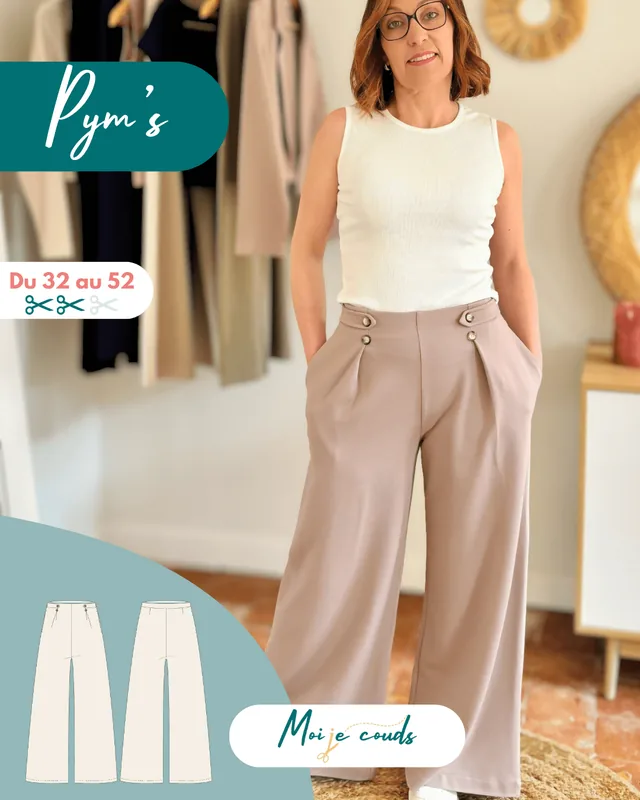
Pym’s trousers – women’s PDF pattern, sizes 32 to 52
-

Raoul T-shirt PDF pattern, sizes 38 to 54
-

Springy trousers or shorts, sizes 32 to 52
-

Sprint trousers, sizes 32 to 52
-

The Belam blouse or dress, sizes 32 to 52
-

The Blend jumpsuit, sizes 32 to 52
-

The Bloomy jacket, sizes 34 to 46
-

The City skirt, sizes 32 to 48
-

The cool (oversized) shirt from size 38 to 54
-

The Dream T-shirt and Dress – pattern for ages 6 to 14 (PDF)
-

The ENJOY men’s polo shirt, sizes 38 to 50
-

The FLEX sweatshirt for ages 6 to 16
-

The Illico jumper, sizes 34 to 52
-

The Lory jacket, sizes 32 to 52
-

The Myxine top in sizes 34 to 46
-

The Puzzle jumper from size 32 to 52
-

The snap-fastening jacket, sizes 32 to 52
-

The Varyo top or bodysuit, sizes 32 to 52
-

The Vinka cardigan, sizes 32 to 52
-

The Zip Zag Sweatshirt for ages 6–16
-

The Zip Zag Sweatshirt from XS to XXL
-

Unisex adult flex sweatshirt, sizes S to XL
PDF sewing patterns for women, children and men: choosing the right pattern from the start
A PDF sewing pattern is a file that can be downloaded immediately after purchase, to be printed at home on A4 paper or in large format at a print shop. The Moi Je Couds shop brings together independent French and French-speaking designers offering patterns ranging from absolute beginner level to more technical constructions. It is not a generalist platform aggregating thousands of anonymous files: every designer listed here has a recognisable stylistic identity and instructions written in French.
The first question to ask yourself before buying isn’t “which garment?” but “what level am I actually at?”. A pattern labelled ‘easy’ by a designer may assume that you know how to fit a concealed zip. Read the instructions on the product page, look at the tutorial photos where available, and check whether the pattern includes seam allowances or if you need to add them yourself: these three points make the difference between a successful project and wasted fabric.
How to read a PDF pattern description before buying
The size chart is the most critical piece of information. On most patterns in this shop, sizes are given as bust, waist and hip measurements in centimetres. If you’re between two sizes, the designers generally recommend cutting the larger size for the top and tapering down to the smaller size at the waist or hips. This isn’t complicated once you’ve understood the pattern’s anatomy, but it does require you not to ignore this when cutting.
Multi-page PDF files (comprising A4 sheets) require the pages to be glued together after printing. It is essential to check that your printer is set to ‘no scaling’ or ‘actual size’, otherwise the pattern will be reduced to 97 per cent, which will distort all your measurements. Each pattern normally includes a 5 cm or 10 cm test square which you should check before assembling anything.
The shop’s designers: what really sets them apart
Atelier Adriette is known for its patterns for everyday clothing, featuring step-by-step photographic instructions, tailored to sewers who are absolute beginners. Instinct Couture offers designs with more structured cuts, often jackets and coats with linings. Le Papa de Jojo focuses on children’s clothing with a practical approach: durable construction, reinforced knees and generous allowances for growth.
Capacha and Comme une Fleur focus more on feminine silhouettes with meticulous finishing details. Klafoutis and Lilikou are child-focused and offer fancy dress costumes and festive pieces alongside the basics. Lab Zéro offers unisex designs with a more urban aesthetic. For seamstresses looking for well-constructed lingerie or underwear patterns, the lingerie collection features designs with instructions on how to sew elastic and bias binding correctly.
If you’re unsure about making a purchase, the collection of free PDF patterns allows you to test a designer’s assembly method and the level of detail in their instructions before buying their other designs.
Patterns for women, children and men: how to organise your project
The women’s patterns make up the most extensive catalogue, with variations by garment type: dresses, blouses, trousers, coats, sweatshirts, skirts, jackets, jumpsuits, dungarees, and accessories. The sizes available vary depending on the designer, but most range from 34 to 52, and several go up to 58.
For children’s patterns, sizes are indicated by age (from birth up to around 14 years, depending on the design), often with the height in centimetres given alongside. The categories available range from pyjamas and coats to costumes for parties and shows. The patterns from the Moi Je Couds brand itself are available via direct access.
The men’s patterns are fewer in number but cover the essentials: T-shirts, sweatshirts, coats and accessories. Seamstresses who want to sew for a partner without having to adapt to entirely different constructions often start with unisex patterns or men’s designs.
Fabric, material, weight: what the pattern doesn’t always make clear
A pattern for a flowing blouse designed for 120 g/m² viscose will not behave in the same way when made from thick 200 g/m² cotton. Most product descriptions mention fabric recommendations, but few specify the ideal weight. A rule of thumb: for structured garments such as jackets and women’s coats, allow for 300 to 600 g/m², depending on whether you are lining the garment or not. For flowing, draped garments, stick to under 160 g/m². Fleece sweatshirts generally require a double-sided fabric (terry on the inside) of around 280 to 320 g/m².
Stretch is another factor that is often overlooked. A pattern for underwear or lingerie is designed for a fabric with at least 50 per cent stretch in both directions. Using a jersey with low stretch on these patterns will result in pieces that are too tight and uncomfortable. Patterns that require stretch fabric will specify this, but checking your fabric before cutting remains your best safeguard.
How do I choose between the different designers in the shop?
Read the product descriptions, looking out for three pieces of information: the specified skill level (beginner/intermediate/advanced), the list of techniques required (e.g. ‘invisible zip’, ‘fitting a lining’), and the size range. If a pattern states 8 to 12 hours’ work for a coat, this is a reliable indication of its complexity. If in doubt, the free patterns offered by several designers allow you to try out their pattern-making style before investing.
What is the difference between a multi-page PDF pattern (A4) and a large-format pattern?
The multi-page A4 format can be printed on any home printer, but requires the sheets to be glued together (15 to 40 sheets depending on the complexity of the garment). The large-format version is sent to a printer or copy shop for printing in A0 or A1, at a cost of 3 to 8 euros depending on the size. Several designers offer both options. For patterns you’ll use frequently, the large-format version is more practical.
Are the patterns from this shop suitable for beginners in sewing?
Yes, provided you choose the patterns explicitly labelled as ‘beginner’. Designers such as Atelier Adriette include photos of each step in their instructions, making it easy to learn on your own. It’s recommended to start with a T-shirt or an elasticated skirt: few pieces, no complex fastenings, and quick results. The free PDF patterns are often simple designs, ideal for a first attempt.
How can I find out which sewing brands are available on Moi Je Couds?
The shop features more than 15 independent designers: Atelier Adriette, Capacha, Comme une Fleur, Fée Main Patrons, Fitiyoo, Instinct Couture, Kandix, Klafoutis, Lab Zéro, Le Papa de Jojo, Les Patronnes, Lilikou, Loumajinne Créations, Mangue-Chocolat, Maya Patterns, Miss Cactus, Vestiaire Éponyme, as well as the Moi Je Couds patterns themselves. Each designer has their own dedicated page featuring all their designs.