
Intermediate-level patterns
Showing all 48 results
-

3-size pencil case – etcetera
-

Amande: the bomber jacket
-

Amaya bum bag
-

Baby bodysuit – PDF sewing pattern from newborn to 24 months (8 sizes)
-

Baby sleeping bag pattern with central opening
-

Blue d’Auvergne bum bag sewing pattern (PDF) – 3 sizes for children and adults
-

Bob Raclette – PDF pattern for babies, children and adults
-

Cacahuete – the adjustable jumpsuit for indoors or outdoors
-
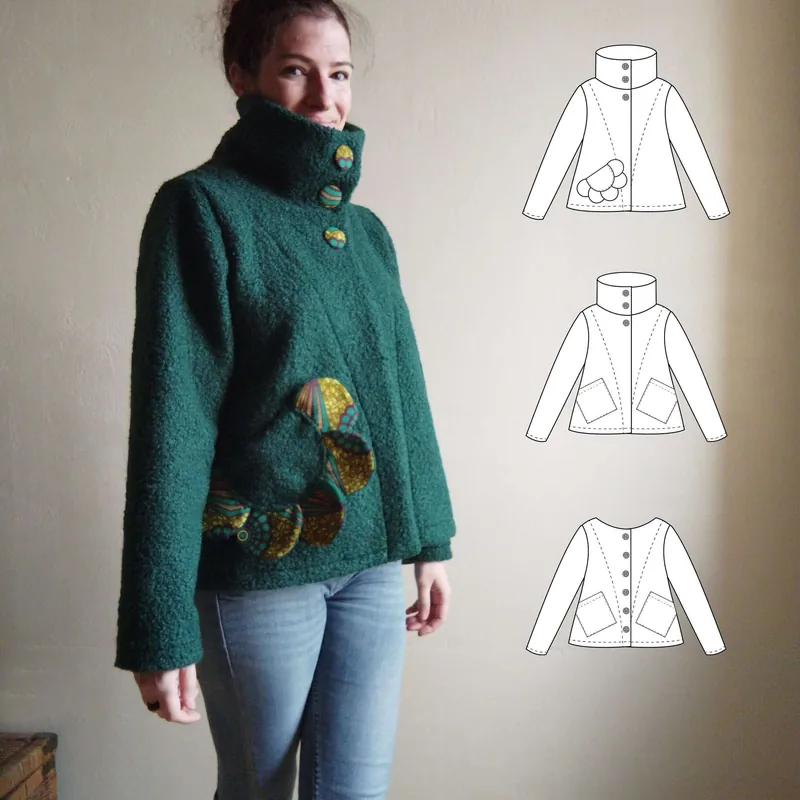
Camur jacket, sizes 32 to 60
-

Carambole – the reversible bob hat
-

Chambarand trousers – PDF pattern for children aged 12 months to 14 years
-

Classic baby sleeping bag PDF pattern in 4 sizes
-

Customisable laptop bag
-

Darla – the shoulder bag in sizes S, M and L
-

Handbag – Léon
-

Ibis bomber jackets, sizes 32 to 52
-

Jewellery pouch, 2 sizes for girls and women – purple
-

Laptop sleeve
-

Laura coin purse
-

Livarot children’s sweatshirt – PDF sewing pattern for ages 6 months to 14 years
-

Marko the Pirate costume
-

Multifunctional coin purse
-

Niki sweatshirt – children’s
-

Niki sweatshirt – women’s
-

PDF pattern for a blue Gex bum bag for children and adults
-

PDF pattern for a long-sleeved children’s T-shirt (ages 2 to 9)
-

PDF pattern for Fauvette skirt / trousers / shorts, sizes 32 to 52
-

PDF pattern for Fauvette trousers / shorts / skirt for children aged 2 to 12
-

PDF pattern for Macadamia hooded zip-up jumper/jacket
-

PDF pattern for the Airelle blouse dress for babies / children / women
-

PDF pattern for the FAYA vintage dress, sizes 30 to 58
-

PDF pattern for the Glynis dress or blouse, sizes 32 to 60
-

PDF pattern for the Sorelle dress/blouse, sizes 32 to 52
-

Pencil case and bag with wide-opening zip, 5 sizes – curry
-

Set of 3 pouches and a wallet – saffron
-

Simplo bum bag PDF pattern
-

Steph clutch
-

The Abondance bum bag
-

The Neufchâtel dress in 11 sizes
-

The Puzzle Mat – PDF pattern for a baby play mat
-

The Sérac half-moon bag in 3 sizes
-

Titouan shorts – women’s and children’s
-

Tote bag and handbag, 4 sizes – cumin
-

Tote bag, pencil case with bow, 3 sizes – Groseille
-

Trousers – Deauville shorts – sizes 34 to 48
-

Unisex rucksack tutorial
-

US-style shoulder bag, 3 sizes – Muscade
-

Zya trousers/shorts – PDF pattern in sizes 32 to 60
Intermediate sewing patterns: the techniques that really make a difference
The line between beginner and intermediate levels hinges on three specific techniques: fitting an invisible zip, constructing a full lining, and making a turn-down collar. Mastering these three techniques opens the door to 80 per cent of the sewn wardrobe. The patterns in this category are selected to guide you there, one project at a time, without skipping any steps.
What you’ll learn with an intermediate sewing pattern
A beginner’s pattern avoids the tricky bits. An intermediate pattern tackles them head-on. You’ll be working with bust darts that are slightly curved from size 42 onwards to follow the curve of the bust, box pleats or flat pleats that require ironing at 150°C on cotton to hold their shape over time, and tailored armholes where the excess sleeve fabric — 1.5 to 2 cm depending on the cut — must be folded before assembly. These are not arbitrary difficulties: they are the mechanisms that give a garment its drape, its lasting fit, and its ability to remain well-worn after 50 washes.
The lining is often the first real hurdle. For a lined jacket, you cut out two complete sets of pieces with slightly reduced seam allowances for the lining (usually 1 cm compared to 1.5 cm for the main fabric), and you must include a ease fold of 1 cm at the centre back seam to allow for movement. The illustrated guides for the PDF patterns in this selection detail these adjustments step by step, with diagrams and, in some cases, detailed photos.
How to choose your first intermediate pattern without getting stuck
The most useful rule: introduce just one new technique per project. A blouse with a shirt collar teaches you how to turn in the collar points and sew neat corners without adding the complication of a lining. A pair of trousers with darts and a fitted waistband helps you practise drape before tackling flap pockets. A skirt with an invisible zip and lining combines two techniques, but on a simple structure that leaves room for concentration.
Structured coats and jackets come last in the progression: they incorporate a lining, a collar, armholes and often a tailored button placket. Realistically, allow 15 to 25 hours for a well-constructed lined coat. This is not a weekend project.
The designers of intermediate-level patterns available in the shop
Instinct Couture is renowned for its trouser patterns, which are very well graded between sizes, making it easier to adjust the hip area without having to redraw the whole pattern. Atelier Adriette offers step-by-step photographic instructions, which are useful when you’re making a lining for the first time and a technical diagram isn’t enough. Kandix specialises mainly in jackets and coats, with guides that explain why each step is taken, not just how — a real game-changer when you start to understand the construction rather than just following instructions blindly.
Les Patronnes, active since 2015, have built their catalogue around dresses and jumpsuits with neat interior finishes. Klafoutis and Maya Patterns offer a good range of sweatshirts and slim-fit casual pieces. For technical accessories — structured bags, zipped pouches — Loumajinne Créations provides patterns that introduce the use of interfacing and special presser feet.
A note on formats: some designers provide separate templates for each size (less cutting, faster printing), whilst others overlay all sizes on a single pattern. If you’re at an intermediate level, PDFs with selectable layers or separate sizes reduce the risk of tracing errors.
PDF formats and media included
Patterns in this category are available in A4 format to be assembled (30 to 90 minutes of gluing depending on the size of the pattern), in A0 format to be printed at a print shop (€2 to €4 per sheet depending on the city), and sometimes in a projectable version for workshops with the necessary equipment. For tricky steps such as fitting an invisible zip or constructing a piped pocket, the patterns with video tutorials allow you to see the technique in action rather than having to interpret it from a static diagram.
And after the intermediate level?
This stage generally takes 3 to 12 months of regular practice, depending on your pace. Once you’re comfortable with linings and fastenings, you can move on to dungarees and jumpsuits with complex cuts, lingerie pieces that make use of stretch fabrics, or men’s collections — coats and structured sweatshirts — which apply the same fundamentals to different proportions. Intermediate-level children’s patterns are also an excellent way to practise: complete constructions on smaller pieces, which are therefore quicker to assemble and use less fabric if a mistake is made.
-
Women’s PDF Patterns
Women’s PDF Patterns
Women’s PDF Pattern
Women’s Blouses
Women’s Jumpsuits
Women’s Skirts
Lingerie
Women’s Coats
Women’s Trousers
Women’s Pyjama Patterns
Jumpsuits/Dungarees
Women’s Dresses
Underwear
Women’s Sweatshirts
Women’s Tops / T-Shirts
Women’s Jackets
Women’s Accessories
Free PDF Patterns
Children’s PDF Patterns
Newborn
Children’s Blouses
Children’s Skirts
Children’s Trousers
Children’s Pyjamas
Children’s Coats
Children’s Dresses
Children’s Sweatshirts
Children’s T-shirts
Children’s Jackets
Children’s Accessories
Fancy dress
Free PDF Patterns
Atelier Adriette
Capacha
Like a Flower
Fée Main Patterns
Fitiyoo
Instinct Couture
Kandix
Klafoutis
Lab Zéro
Jojo’s Dad
The Bosses
Lilikou
Loumajinne Creations
Mango-Chocolate
Maya Patterns
Miss Cactus
I Sew
Vestiaire Éponyme
- Submit your designs
-
Women’s PDF patterns
-
Women’s PDF Patterns
-
Women’s Blouses
-
Women’s Jumpsuits
-
Women’s Skirts
-
Lingerie
-
Women’s Coats
-
Women’s Trousers
-
Women’s Pyjama Patterns
-
Jumpsuits/Dungarees
-
Women’s Dresses
-
Underwear
-
Women’s Sweatshirts
-
Women’s Tops / T-Shirts
-
Women’s Jackets
-
Women’s Accessories
-
Free PDF Patterns
-